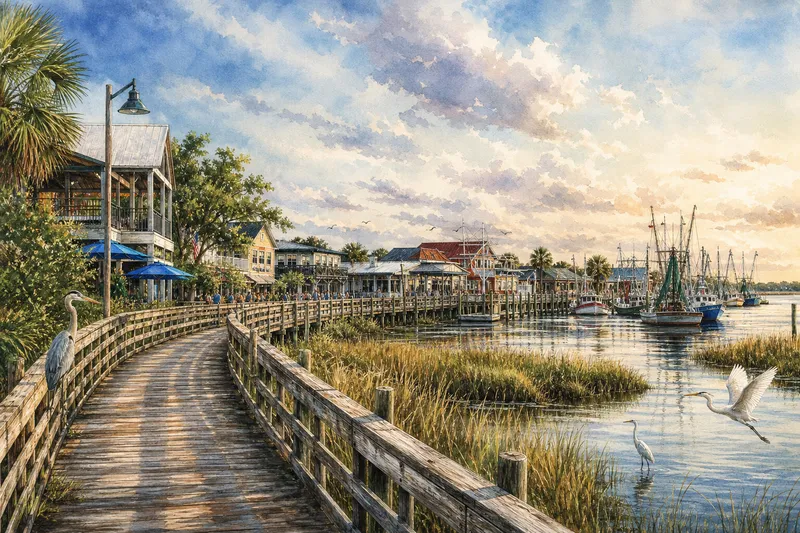
The working waterfront
How clams became a Cedar Key livelihood
A plate of Cedar Key clams tells a story that starts well beyond Dock Street. Hatcheries produce young clams, nurseries raise the seed, and growers tend them on leased submerged land in the Gulf. Wholesalers then sort and ship the harvest to markets and restaurants.
In the 1990s, oyster closures and restrictions on net fishing changed the livelihoods of local fishing families. Retraining programs helped fishermen move into clam aquaculture, keeping their work connected to the water even as the industry changed.
Explore Cedar Key’s working waterfrontRead the UF/IFAS story of Cedar Key aquaculture ↗